
On this page we’ll explain the breeding mechanics in Pokémon Omega Ruby & Alpha Sapphire.
This includes how the two Pokémon Day Cares operate, how breeding works, and some more advanced topics like passing down abilities, moves, and IVs, plus shiny breeding.
Breeding Basics
Pokémon Breeding requires leaving two Pokémon with compatible Egg Groups at a Day-Care. After a cycle, which consists of 256 steps in-game, the Pokémon may generate an Egg.
The table below lists the odds of obtaining an Egg every cycle.
| Pokémon Species | Original Trainer | Chance of Producing an Egg (per cycle) |
|---|---|---|
| Same | Different | 88% (with an Oval Charm) 70% (without an Oval Charm) |
| Same | Same | 80% (with an Oval Charm) 50% (without an Oval Charm) |
| Different | Different | |
| Different | Same | 40% (with an Oval Charm) 20% (without an Oval Charm) |
The Day Cares
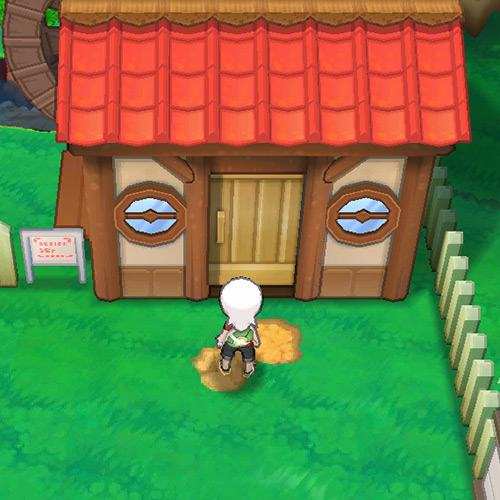
There are two different Day Cares to choose from in Omega Ruby & Alpha Sapphire. The earliest available one is located on Route 117, a short distance away from the entrance while leaving Mauville.
The second Day-Care is located in the Battle Resort, east of the Pokémon Center.
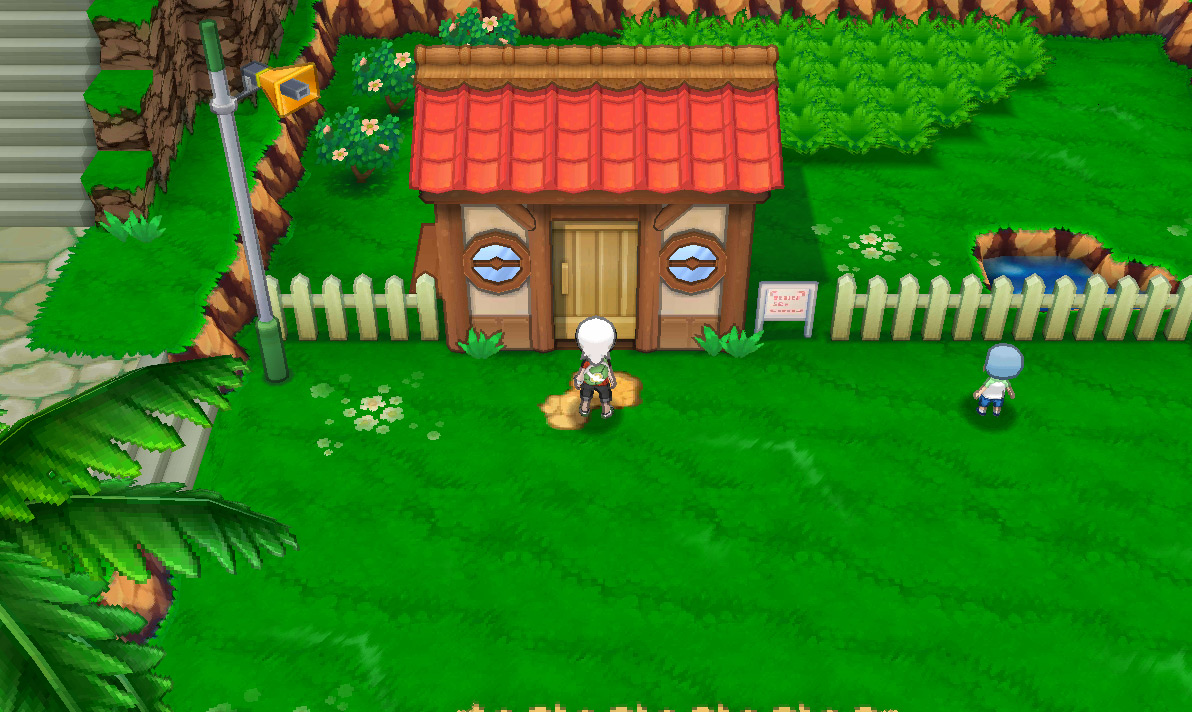
You will receive the eggs from the old man (Route 117) or from the young boy (Battle Resort) standing outside each of these Day Cares.
If nothing happens, the old man and the young boy will be facing towards the yard. Once the Pokémon at the Day Care produce an Egg, you will see the old man or the young boy facing towards the road instead.

Day Care Eggs
The offspring of your eggs will be determined by the parents’ species, as shown in the table below. Eggs will always hatch into the earliest possible evolutionary stage for the species.
Legendary Pokémon, with Manaphy being the sole exception, cannot be bred. The same applies to Pokémon in the “No Eggs Discovered” group.
Genderless Pokémon can only breed with a Ditto.
| Parent #1 | Parent #2 | Offspring |
|---|---|---|
| Male (same species or Egg Group) | Female (same species or Egg Group) | Same species as the female parent |
| Male (any species or Egg Group) | Ditto | Same species as the male parent |
| Female (any species or Egg Group) | Ditto | Same species as the female parent |
There are, however, two notable exceptions to the rules:
- The Nidoran♀ and Nidoran♂ lines have a 50% chance of producing either counterpart
- Volbeat and Illumise have a 50% chance of producing either counterpart
Incense Breeding
Some baby Pokémon can only be bred if the parent Pokémon holds a specific Incense.
The table below lists the Incense required for each baby Pokémon & which parent needs to be holding the incense to get the corresponding baby egg.
| Baby Pokémon | Parent Pokémon | Incense |
|---|---|---|
| Happiny | Chansey, Blissey | Luck Incense |
| Mime Jr. | Mr. Mime | Odd Incense |
| Munchlax | Snorlax | Full Incense |
| Azurill | Marill, Azumarill | Sea Incense |
| Bonsly | Sudowoodo | Rock Incense |
| Wynaut | Wobbuffet | Lax Incense |
| Mantyke | Mantine | Wave Incense |
| Budew | Roselia, Roserade | Rose Incense |
| Chingling | Chimecho | Pure Incense |
Breeding Mechanics
Parents can pass down the following traits to their offspring:
- Abilities
- Moves
- Individual Values (IVs)
- Natures
We’ll detail each of these one-by-one.
Passing Down Abilities
Parent Pokémon have an 80% chance of passing down a regular ability, and a 60% chance of passing down a Hidden Ability.
If the parent has a regular ability, then the offspring has an 80% chance of inheriting it, and a 20% chance of having a different ability.
If the parent Pokémon has a Hidden Ability, then the offspring has a 60% chance of inheriting it from their parent, and a 40% chance of having a regular ability instead (20% chance for each of the species’ regular ability).
Certain species – like starters – can only have two possible abilities instead of the usual three (a regular one and a Hidden Ability). In these cases, the offspring is naturally guaranteed to inherit the regular ability from its parent Pokémon.
On the other hand, if the parent has a Hidden Ability, then the probability of passing it down to the offspring remains unchanged, at 60%.
The chances of passing down an ability are also determined by the parent’s gender:
- When breeding a Male and a Female Pokémon, the offspring’s ability is determined by the Female parent
- When breeding a Pokémon of any gender with a Ditto, then the ability is determined by the non-Ditto parent
Passing Down Moves
Parent Pokémon also have a chance of passing down moves to their offspring.
While the offspring’s moveset is randomly generated, some moves will have a higher chance of being passed down.
The bulleted list below includes which moves can be passed down from parents to their offspring, from the highest to the lowest priority. Move learnset restrictions still apply.
- Egg Moves (inherited from the parents)
- TM/HM moves (inherited from the parents)
- Moves the offspring can learn by leveling up (inherited from the parents)
- Offspring’s level 1 moveset
Passing Down IVs
The offspring is guaranteed to inherit three IVs, at random, from their parents. IVs can be passed down by either parent.
Having one of the parents hold a Destiny Knot will make the offspring inherit five IVs instead of three. However, these IVs are decided at random, regardless of which parent holds the Destiny Knot.
If one of the Pokémon holds a “Power” item, then the offspring is guaranteed to inherit a specific IV from that parent. The table below lists all Power items and their corresponding IV stat:
| Item | IV Stat |
|---|---|
| Power Weight | HP |
| Power Bracer | Attack |
| Power Belt | Defense |
| Power Lens | Sp. Attack |
| Power Band | Sp. Defense |
| Power Anklet | Speed |
Passing Down Natures
A parent Pokémon holding an Everstone is always going to pass down its nature to the offspring. If both parents hold an Everstone, then the offspring’s nature will be randomly determined between the two.
Breeding Shiny Pokémon
Breeding Pokémon using the Masuda Method and having the Shiny Charm can raise your chances of hatching a Shiny Pokémon from an Egg.
The Masuda Method consists of breeding two Pokémon from different languages. A Pokémon’s language is indicated by a marker to the right of its level on the Pokémon’s status screen.
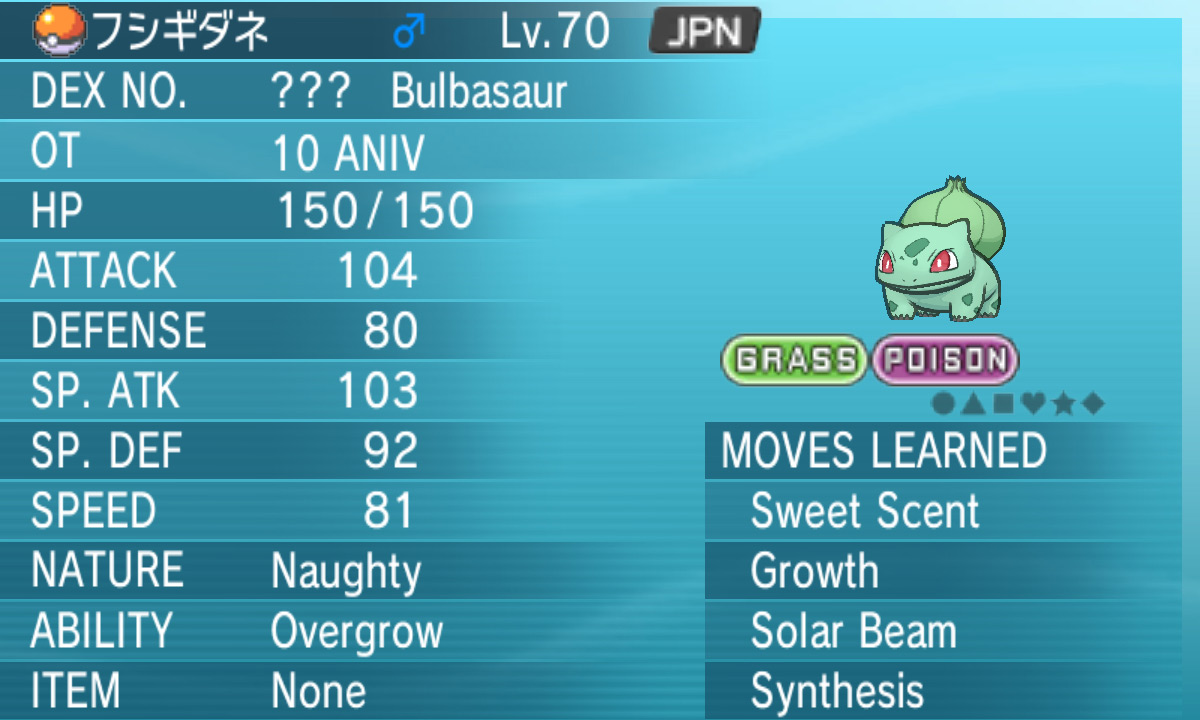
Having the Shiny Charm will also slightly increase the odds of breeding a Shiny Pokémon as well.
The table below lists the odds of obtaining a Shiny Pokémon by breeding with each method.
| Breeding Method | Odds |
|---|---|
| Normal method | 0.002% (1/4096) |
| Shiny Charm | 0.07% (1/1365) |
| Masuda Method | 0.15% (1/683) |
| Masuda Method + Shiny Charm | 0.2% (1/512) |
Egg Hatching Cycles
After receiving an Egg from the Day-Care, you will have to complete a number of cycles for it to hatch.
Egg cycles are determined by the Pokémon’s species, and usually range from 5 to 40. A single Egg cycle consists of 257 steps in-game.
You can check your Egg’s stats screen to see how close it is to hatching, as indicated by the quotes listed below.
| Cycles Remaining | Quote |
|---|---|
| 11 to 40 | What Pokémon will hatch from this Egg? It doesn’t seem close to hatching. |
| 6 to 10 | It appears to move occasionally. It may be close to hatching. |
| 5 or fewer | Sounds can be heard coming from the inside! This Egg will hatch soon! |
